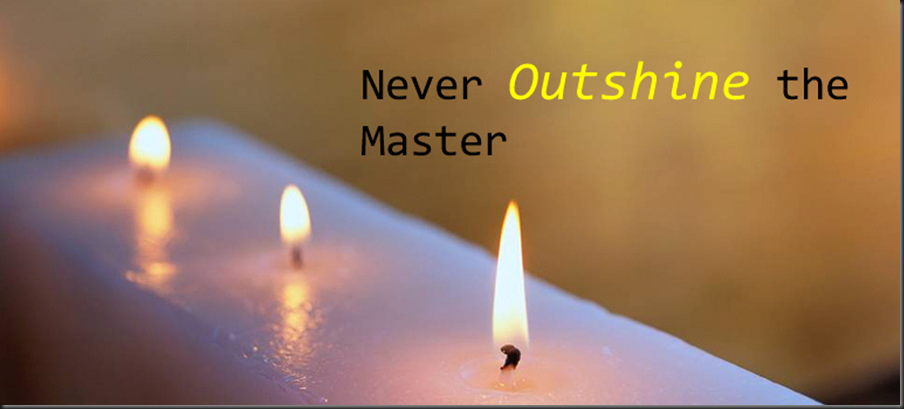
Law 1: Never Outshine The Master

image
Always make those above you feel comfortably superior.  In your desire to please or impress them, do not go too far in displaying your talents or you might accomplish the opposite – inspire fear and insecurity.  Make your masters appear more brilliant than they are and you will attain the heights of power.King Louis XIV and his Finance Minister Fouquet
In 17th century France, Finance Minister Nicholas Fouquet had spent enormous sums in building a magnificent château on his estate of Vaux-le-Vicomte. He then threw a lavish party to show off his connections, cultivated manner and charm. Thinking this move would make him an indispensable asset to the king, Fouquet had actually offended his master who did not like the fact people were more charmed by his finance minister than by him. He unintentionally outshone his master, King Louis XIV, making the King feel insecure. In 1661, at age 23, Louis XIV visited Vaux-le-Vicomte, the country estate of his finance minister, Nicolas Fouquet, and was outraged by its magnificence. The King found a convenient excuse to get rid of Fouquet who then spent the next 20 years of his life in prison. King Louis XIV went ahead to build Palace of Versailles which was much more grander and lavish than the Chateau built by Fouquet to display his charms and connections.

How Galileo used the Law in his favor?

Galileo was clever in observing this law by giving glory to his patrons. In order to solve his perennial problem of funding, he dedicated his discovery of the moons of Jupiter to the Medici, since the royal symbol of the Medici family was the planet Jupiter. He then commissioned an emblem for them, with each moon representing one of the sons who revolved around the patriarch. The Medici family became his major patron, appointing him their official court mathematician and philosopher, thereby giving him a more comfortable life and a steady salary.

Lesson:

• Present your ideas in a way that they echo your boss’s thought
• Act less smarter than your boss
• Do not take your position at work or in life for granted
• Always make sure to make it seem like you want to seek the superior's expertise and advice. Discreet flattery is very powerful.

Law 48: Assume Formlessness

image
By taking a shape, by having a visible plan, you open yourself to attack. Instead of taking a form for your enemy to grasp keep yourself adaptable and on the move. Accept the fact that nothing is certain and no law is fixed. The best way to protect yourself is to be as fluid and formless as water; never bet on stability or lasting order. Everything changes.

The way of the world
· In the face of the world's harshness and danger, organisms of any kind develop protection—a coat of armor, a rigid system, a comforting ritual.
· For the short term it may work, but for the long term it spells disaster.
· People weighed down by a system and inflexible ways of doing things cannot move fast, cannot sense or adapt to change.
· People lumber around more and more slowly until they go the way of the brontosaurus.
· Learn to move fast and adapt or you will be eaten.
· The best way to avoid this fate is to assume formlessness.
· No predator alive can attack what it cannot see.
Value Movement over Position
· Your speed and mobility make it impossible to predict your moves
· Unable to understand you, your enemy can form no strategy to defeat you.
· Instead of fixing on particular spots, this indirect form of warfare spreads out, just as you can use the large and disconnected nature of the real world to your advantage.
· Be like a vapor. Do not give your opponents anything solid to attack; watch as they exhaust themselves pursuing you, trying to cope with your elusiveness.
· Only formlessness allows you to truly surprise your enemies.
· By the time they figure out where you are and what you are up to, it is too late.

10 Reasons to Emulate the Powerful
1. The powerful are often people who in their youth have shown immense creativity in expressing something new through a new form.
2. Society grants them power because it hungers for and rewards this sort of newness.
3. Power can only thrive if it is flexible in its forms.
4. To be formless is not to be amorphous; everything has a form—it is impossible to avoid.
5. The formlessness of power is more like that of water, or mercury, taking the form of whatever is around it.
6. Changing constantly, it is never predictable.
7. The powerful are constantly creating form.
8. Their power comes from the rapidity with which they can change.
9. Formlessness is in the eye of the enemy who cannot see what they are up to and so has nothing solid to attack.
10. This is the premier pose of power: ungraspable, as elusive and swift as the god Mercury, who could take any form he pleased and used this ability to wreak havoc on Mount Olympus.
WARNINGS
· The first psychological requirement of formlessness is to train yourself to take nothing personally.
· Never show any defensiveness.
· When you act defensive, you show your emotions, revealing a clear form.
· Your opponents will realize they have hit a nerve, an Achilles' heel. And they will hit it again and again.
· Never let anyone get your back up.
· Be like a slippery ball that cannot be held.
· Let no one know what gets to you, or where your weaknesses are.
· Make your face a formless mask and you will infuriate and disorient your scheming colleagues and opponents.

Formlessness makes your enemies hunt all over for you, scattering their own forces, mental as well as physical. When you play with formlessness, keep on top of the process, and keep your long-term strategy in mind. When you assume a form and go on the attack, use concentration, speed, and power.


Law 47: Do Not go Past The Mark You Aimed For, In Victory Learn When To Stop

image

The moment of victory is often the moment of greatest peril. In the heat of victory, arrogance and overconfidence can push you past the goal you had aimed for, and by going too far, you make more enemies than you defeat. Do not allow success to go to your head. There is no substitute for strategy and careful planning. Set a goal, and when you reach it, stop.

The Lesson First

There is nothing more intoxicating than victory, and nothing more dangerous.
· In the realm of power, you must be guided by reason.
· To let a momentary thrill or an emotional victory influence or guide your moves - will prove fatal. When you attain success, step back.
· Be cautious. When you gain victory, understand the part played by the particular circumstances of a situation.
· Never simply repeat the same actions again and again.
· History is littered with the ruins of victorious empires and the corpses of leaders who could not learn to stop and consolidate their gains.
· The powerful vary their rhythms and patterns, change course, adapt to circumstance, and learn to improvise.
· You must step back and look where you are going.
· Control your emotions and come to a kind of mental halt when you have attained success.
· Steady yourself, give yourself the space to reflect on what has happened.
· Examine the role of circumstance and luck in your success.
· You have to be able to control yourself before you can control the others.

A Dangerous Game

· Success plays strange tricks on the mind.
· It makes you feel invulnerable, while also making you more hostile and emotional when people challenge your power. I
· It makes you less able to adapt to circumstance.
· You come to believe your character is more responsible for your success than your strategizing and planning.

All Good Things Must Come to an End

· You need to realize that your moment of triumph is also a moment when you have to rely on cunning and strategy all the more.
· Consolidating your power base, recognizing the role of luck and circumstance in your success.
· Remaining vigilant against changes in your good fortune.
· It is the moment of victory when you need to play the courtier's game and pay more attention than ever to the laws of power.

Good Luck V. Bad Luck

· Good luck is more dangerous than bad luck.
· Bad luck teaches valuable lessons about patience, timing, and the need to be prepared for the worst.
· Good luck deludes you into the opposite lesson, making you think your brilliance will carry you through.
· Your fortune will inevitably turn, and when it does you will be completely unprepared.
· The good luck that elevates you or seals your success brings the moment for you to open your eyes:
· The wheel of fortune will hurtle you down as easily as up.
· If you prepare for the fall, it is less likely to ruin you when it happens.

Top 10 WARNINGS

1. People who have a run of success can catch a kind of fever, and even when they themselves try to stay calm, the people below them often pressure them to go past their mark and into dangerous waters.
2. Have to have a strategy for dealing with these people.
· Simply preaching moderation will make you look weak and small-minded; seeming to fail to follow up on a victory can lessen your power.
3. When you beat an enemy, make your victory complete.
· Crush him into nonexistence. In the moment of victory, you do not restrain yourself from crushing the enemy you have defeated, but rather from needlessly advancing against others.
4. Be merciless with your enemy, but do not create new enemies by overreaching.
5. There are some who become more cautious than ever after a victory, which they see as just giving them more possessions to worry about and protect.
6. Your caution after victory should never make you hesitate.
7. Do not lose momentum, but rather act as a safeguard against rash action.
· Momentum as a phenomenon is greatly overrated.
8. You create your own successes, and if they follow one upon the other, it is your own doing.
9. Belief in momentum will only make you emotional, less prone to act strategically, and more apt to repeat the same methods.
10. Leave momentum for those who have nothing better to rely upon.

Law 46: Never Appear Too Perfect

image

Appearing better than others is always dangerous, but most dangerous of all is to appear to have no faults or weaknesses. Envy creates silent enemies. It is smart to occasionally display defects, and admit to harmless vices, in order to deflect envy and appear more human and approachable. Only gods and the dead can seem perfect with impunity.

Green Eyed-Monsters

Only a minority can succeed at the game of life, and that minority inevitably arouses the envy of those around them.
· Once success happens your way, however, the people to fear the most are those in your own circle, the friends and acquaintances you have left behind.
· Feelings of inferiority gnaw at them; the thought of your success only heightens their feelings of stagnation.
· Envy, which the philosopher Kierkegaard calls "unhappy admiration," takes hold.
· You may not see it but you will feel it someday—unless, that is, you learn strategies of deflection, little sacrifices to the gods of success.
· Either cloud your brilliance occasionally, purposefully revealing a defect, weakness, or anxiety, or attributing your success to luck; or simply find yourself new friends.
· Never underestimate the power of envy.

The Power Envy

1. The insidious envy of the masses can actually be deflected quite easily: Appear as one of them in style and values.
2. Make alliances with those below you, and elevate them to positions of power to secure their support in times of need.
3. Never flaunt your wealth, and carefully conceal the degree to which it has bought influence.
4. Make a display of deferring to others, as if they were more powerful than you.
5. Never be so foolish as to believe that you are stirring up admiration by flaunting the qualities that raise you above others.
· By making others aware of their inferior position, you are only stirring up "unhappy admiration," or envy, which will gnaw away at them until they undermine you in ways you cannot foresee.
6. The master of power understands that the appearance of superiority over others is inconsequential next to the reality of it.

“Envy is a weed that should not be watered." Cosimo de Medici.

Strategies for Dealing with Emotions of Envy

1. Accept the fact that there will be people who will surpass you in some way, and also tile fact that you may envy them.
2. Make that feeling a way of pushing yourself to equal or surpass them some-day.
3. Let envy turn inward and it poisons the soul; expel it outward and it can move you to greater heights.
4. Understand that as you gain power, those below you will feel envious of you. They may not show it but it is inevitable. Do not naively accept the facade they show you—read between the lines of their criticisms, their little sarcastic remarks, the signs of backstabbing, the excessive praise that is preparing you for a fall, the resentful look in the eye. Half the problem with envy comes when we do not recognize it until it is too late.
5. Since it is far easier to avoid creating envy in the first place than to get rid of it once it is there, you should strategize to forestall it before it grows.
6. It is often your own actions that stir up envy, your own unawareness.
7. By becoming conscious of those actions and qualities that create envy, you can take the teeth out of it before it nibbles you to death.
· Expect that when people envy you they will work against you insidiously. They will put obstacles in your path that you will not foresee, or that you cannot trace to their source. It is hard to defend yourself against this kind of attack. And by the time you realize that envy is at the root of a person's feelings about you, it is often too late: Your excuses, your false humility, your defensive actions, only exacerbate the problem.

Three Dangers of Power

1. The sudden improvement in fortune.
2. An unexpected promotion.
3. A victory or success that seems to come out of nowhere.
· Power requires a wide and solid support base, which envy can silently destroy.

Reasons Not to Stir Up Envy

1. Be careful not to affect a false modesty that people can easily see through.
2. Your humility, and your openness to those you have left behind, has to seem genuine
3. Any hint of insincerity will only make your new status more oppressive.
4. Do not alienate your former peers.
5. Emphasize how lucky you have been.
6. Make your happiness seem more attainable to other people, and the need for envy less acute.
7. Display a weakness, a minor social indiscretion, a harmless vice.
8. Give those who envy you something to feed on, distracting them from your more important sins.
9. You may have to play games with appearances, but in the end you will have what counts: true power.
10. Do not try to help or do favors for those who envy you; they will think you are condescending to them.
11. Consider showing your wealth only on the inside of your house.
12. Apply this wisdom to your own character.

WARNINGS

· Beware of some of envy's disguises.
· Excessive praise is an almost sure sign that the person praising you envies you.
· They are either setting you up for a fall.
· It will be impossible for you to live up to their praise.
· They are sharpening their blades behind your back.
· Those who are hypercritical of you, or who slander you publicly, probably envy you as well.
· Recognize their behavior as disguised envy and you keep out of the trap of mutual mud-slinging, or of taking their criticisms to heart.
· Win your revenge by ignoring their measly presence.
· Once envy reveals itself for what it is, the only solution is often to flee the presence of the enviers, leave your enviers to stew in a hell of their own creation.

Finally, be aware that some environments are more conducive to envy than others. The effects of envy are more serious among colleagues and peers, where there is a veneer of equality. Envy is also destructive in democratic environments where overt displays of power are looked down upon. Be extra sensitive in such environments. It is almost impossible to avoid envy in such cases, and there is little you can do but accept it graciously and take none of it personally.

As Thoreau once said, "Envy is the tax which all distinction must pay."

Law 45: Preach the Need for Change But Never Reform Too Much at Once

image

Everyone understands the need for change in the abstract, but on the day-to-day level people are creatures of habit. Too much innovation is traumatic, and will lead to revolt. If you are new to a position of power, or an outsider trying to build a power base, make a show of respecting the old way of doing things. If change is necessary, make it feel like a gentle improvement on the past.

Consequences of Change

1. The man who initiates strong reforms often becomes the scapegoat for any kind of dissatisfaction.
2. Eventually the reaction to your reforms may consume you, for change is upsetting to the human animal, even when it is for the good.
· The world is and always has been full of insecurity and threat.
· We latch on to familiar faces and create habits and rituals to make the world more comfortable.
3. Change can be pleasant and even sometimes desirable in the abstract, but too much of it creates an anxiety that will stir and boil beneath the surface and then eventually erupt.

You are Not a Psychic but Anticipation is a Good Thing

1. Never underestimate the hidden conservatism of those around you. It is powerful and entrenched.
2. Never let the seductive charms of an idea cloud your reason:
3. You cannot make people see the world your way.
4. You cannot wrench them into the future with painful changes. They will rebel.
5. If reform is necessary, anticipate the reaction against it and find ways to disguise the change and sweeten the poison.

The Powerful Past

1. What has happened before seems greater; habit and history give any act weight.
· Use this to your advantage.
2. When you destroy the familiar you create a void or vacuum.
· People fear the chaos that will flood in to fill it.
3. You must avoid stirring up such fears at all cost.
4. Borrow the weight and legitimacy from the past, however remote, to create a comforting and familiar presence.
· This will give your actions romantic associations, add to your presence, and cloak the nature of the changes you are attempting.
5. The fact that the past is dead and buried gives you the freedom to reinterpret it. To support your cause, tinker with the facts.
6. The past is a text in which you can safely insert your own lines.

The Solutions

1. A simple gesture like using an old title or keeping the same number for a group will tie you to the past and support you with the authority of history.
2. Make a loud and public display of support for the values of the past.
3. Seem to be a zealot for tradition and few will notice how unconventional you really are.
4. Quietly enact a radical change, while appearing to safeguard tradition.
5. The changes you make must seem less innovative than they are.
· If your reform is too far ahead of its time, few will understand it, and it will stir up anxiety and be hopelessly misinterpreted.
6. If you work in a tumultuous time, there is power to be gained by preaching a return to the past, to comfort, tradition, and ritual.
7. During a period of stagnation, on the other hand, play the card of reform and revolution—but beware of what you stir up.
· Those who finish a revolution are rarely those who start it. You will not succeed at this dangerous game unless you are willing to forestall the inevitable reaction against it by playing with appearances and building on the past.

WARNINGS

· The past is a corpse to be used as you see fit.
· If what happened in the recent past was painful and harsh, it is self-destructive to associate yourself with it.
· Even an ugly recent history will seem preferable to an empty space.
· Fill that space immediately with new rituals and forms.
· Soothing and growing familiar, these will secure your position among the masses.

Finally, the arts, fashion, and technology would seem to be areas in which power would come from creating a radical rupture with the past and appearing cutting edge. Indeed, such a strategy can bring great power, but it has many dangers. It is inevitable that your innovations will be outdone by someone else. You have little control—someone younger and fresher moves in a sudden new direction, making your bold innovation of yesterday seem tiresome and tame today.

Law 44: Disarm and Infuriate with the Mirror Effect

image

The mirror reflects reality, but it is also the perfect tool for deception: When you mirror your enemies, doing exactly as they do, they cannot figure out your strategy. The Mirror Effect mocks and humiliates them, making them overreact. By holding up a mirror to their psyches, you seduce them with the illusion that you share their values; by holding up a mirror to their actions, you teach them a lesson. Few can resist the power of the Mirror Effect.

Mirrors have the power to disturb us. Gazing at our reflection in the mirror, we most often see what we want to see—the image of ourselves with which we are most comfortable. We tend not to look too closely, ignoring the wrinkles and blemishes. But if we do look hard at the reflected image, we sometimes feel that we are seeing ourselves as others see us, as a person among other people, an object rather than a subject. That feeling makes us shudder—we see ourselves, but from the outside, minus the thoughts, spirit, and soul that fill our consciousness. We are a thing.

Four Main Mirror Effects

1. The Neutralizing Effect

  1. Do what your enemies do, following their actions as best you can, and they cannot see what you are up to.
  2. Their strategy for dealing with you depends on your reacting to them in a way characteristic of you; neutralize it by playing a game of mimicry with them.
  3. The tactic has a mocking, even infuriating effect.
  4. You lay invisible traps, or push your opponents into the trap they planned for you.
  5. This powerful technique often appears in political campaigning.
  6. It is also useful for disguising those situations in which you have no particular strategy yourself.
  7. A reverse version of the Neutralizing Effect is the Shadow: You shadow your opponents' every move without their seeing you.
  8. Use the Shadow to gather information that will neutralize their strategy later on, when you will be able to thwart their every move.
  9. The Shadow is effective because to follow the movements of others is to gain valuable insights into their habits and routines.
  10. The Shadow is the preeminent device for detectives and spies.

2. The Narcissus Effect

  1. You look deep into the souls of other people; fathom their inmost desires, their values, their tastes, their spirit; and you reflect it back to them, making yourself into a kind of mirror image.
  2. Your ability to reflect their psyche gives you great power over them; they may even feel a tinge of love.
  3. This is simply the ability to mimic another person not physically, but psychologically, and it is immensely powerful because it plays upon the unsatisfied self-love of a child
  4. If you can show you understand another person by reflecting their inmost feelings, they will be entranced and disarmed, all the more so because it happens so rarely.
  5. No one can resist this feeling of being harmoniously reflected in the outside world, even though you might well be manufacturing it for their benefit, and for deceptive purposes of your own.

3. The Moral Effect

  1. You mirror what other people have done to you, and do so in a way that makes them realize you are doing to them exactly what they did to you.
  2. You make them feel that their behavior has been unpleasant, as opposed to hearing you complain and whine about it, which only gets their defenses up.
  3. They feel the result of their actions mirrored back at them, they realize in the profoundest sense how they hurt or punish others with their unsocial behavior.
  4. You objectify the qualities you want them to feel ashamed of and create a mirror in which they can gaze at their follies and learn a lesson about themselves.
  5. This technique is often used by educators, psychologists, and anyone who has to deal with unpleasant and unconscious behavior.
  6. This is the Teacher's Mirror. Whether or not there is actually anything wrong with the way people have treated you, however, it can often be to your advantage to reflect it back to them in a way that makes them feel guilty about it.

4. The Hallucinatory Effect

  1. Effect comes from creating a perfect copy of an object, a place, a person.
  2. This copy acts as a kind of dummy—people take it for the real thing, because it has the physical appearance of the real thing.
  3. This is the preeminent technique of con artists, who strategically mimic the real world to deceive you.
  4. It also has applications in any arena that requires camouflage. This is the Deceiver's Mirror

Power of Mirroring

    • You give people the feeling that you share their thoughts and goals.
    • If they suspect you have ulterior motives, the mirror shields you from them, preventing them from figuring out your strategy.
    • This will infuriate and unsettle them. By playing the double, you steal their thunder, suck away their initiative and make them feel helpless.
    • You also gain the ability to choose when and how to unsettle them—another avenue to power.
    • The mirror saves you mental energy: simply echoing the moves of others gives you the space you need to develop a strategy of your own.

WARNINGS

· Mirrors contain great power but also dangerous reefs.· You can often back into a mirrored situation without fully understanding it.· Most often you suffer by the comparison, seeming either weaker than the previous occupant of your position or else tainted by any unpleasant associations that person has left behind.· Avoid the association-effects like the plague. · In a mirrored situation you have little or no control over the reflections and recollections that will be connected to you.· Any situation beyond your control is dangerous. · Doesn’t matter if the person or event has positive associations, you will suffer from not being able to live up to them, since the past generally appears greater than the present. · If you recognize people associating you with some past event or person, do everything you can to separate yourself from that memory and to shatter the reflection.

Law 43: Work on the Heart and Mind of Others

image

Coercion creates a reaction that will eventually work against you. You must seduce others into wanting to move in your direction. A person you have seduced becomes your loyal pawn. And the way to seduce others is to operate on their individual psychologies and weaknesses. Soften up the resistant by working on their emotions, playing on what they hold dear and what they fear. Ignore the hearts and minds of others and they will grow to hate you.

5 Disastrous Attitudes in the Realm of Power
1. These types live in their own bubble.
2. They seem to feel they are born kings and queens, and that attention is owed them.
3. They do not consider anyone else's nature, but bulldoze over people with the self-righteous arrogance.
4. Pampered and indulged as children, so as adults they still believe that everything must come to them; convinced of their own charm.
5. They make no effort to charm, seduce, or gently persuade anyone.

The Energy and Art of Seduction
1. At all times you must attend to those around you, gauging their particular psychology,
2. Tailor your words to what you know will entice and seduce them.
3. The higher your station, the greater the need to remain attuned to the hearts and minds of those below you,
4. Create a base of support to maintain you at the pinnacle.

Wrong Moves
· Your first option may be quick and easy, but over time it brews ugly emotions in the hearts of the vanquished.
· Their resentment turns to hatred; such animosity keeps you on edge
· You spend your energy protecting what you have gained, growing paranoid and defensive
· Without that base, your power will teeter, and at the slightest change of fortune those below will gladly assist in your fall from grace.
· Force will only strengthen their resistance.

Think Before You Act
· Use patience, it brings you peace of mind; it converts a potential enemy into a pillar of support.
· Take the time to calculate and attune yourself to your targets' emotional makeup and psychological weaknesses.
· Be alert to both what separates them from everyone else (their individual psychology) and what they share with everyone else
· Soften them up, alternate harshness with mercy.
· Play on their basic fears: hate, jealousy and also primary emotions their loves—freedom, family, etc.
· Once you break them down, you will have a lifelong friend and fiercely loyal ally.
· Demonstrating, as simply as possible, how an action will benefit them.
· Self-interest is the strongest motive of all: it secures the deal.
· Learn to play the numbers game. The wider your support base the stronger your power

WARNING

Understanding that one alienated, disaffected soul can spark a blaze of discontent, you too must constantly win over more allies on all levels—a time will inevitably come when you will need them.

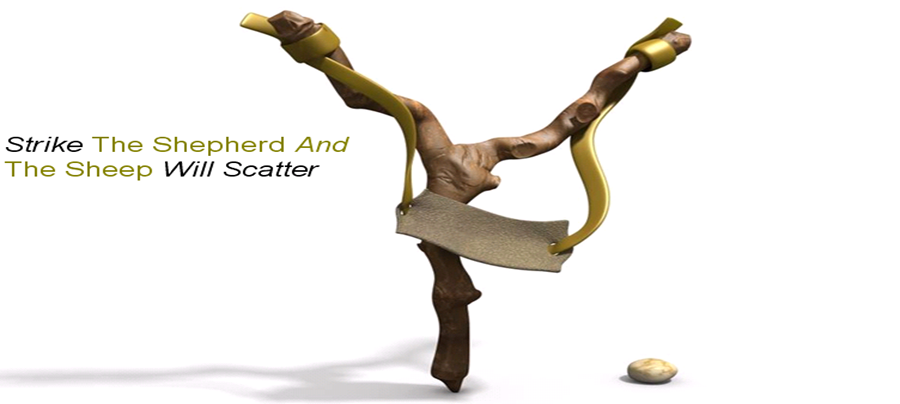
Law 42: Strike the Shepherd and the Sheep Will Scatter

image

Trouble can often be traced to a single strong individual—the stirrer, the arrogant underling, the poisoner of goodwill. If you allow such people room to operate, others will succumb to their influence. Do not wait for the troubles they cause to multiply, do not try to negotiate with them—they are irredeemable. Neutralize their influence by isolating or banishing them. Strike at the source of the trouble and the sheep will scatter.

Within any group, trouble can most often be traced to a single source, the unhappy, chronically dissatisfied one who will always stir up dissension and infect the group with his or her ill ease. Before you know what hit you the dissatisfaction spreads. Act before it becomes impossible to disentangle one strand of misery from another, or to see how the whole thing started.

Identify and Shut the Hell Raisers Down

1. First, recognize troublemakers by their overbearing presence, or by their complaining nature.
2. Once you spot them do not try to reform them or appease them—that will only make things worse.
3. Do not attack them, whether directly or indirectly, for they are poisonous in nature and will work underground to destroy you.
4. Do as the Athenians did: Banish them before it is too late.
5. Separate them from the group before they become the eye of a whirlpool.
6. Do not give them time to stir up anxieties and sow discontent.
7. Do not give them room to move. Let one person suffer so that the rest can live in peace.
8. Once you recognize who the stirrer is, pointing it out to other people will accomplish a great deal.
9. Understanding who controls the group dynamic is a critical realization.
10. Stirrers drive by hiding in the group, disguising their actions among the reactions of others.

Who Should You Isolate

· Find powerful people who have alienated themselves from the group.
· People whose power has gone to their heads, and they consider themselves superior.
· Those people who have perhaps lost their knack of communicating with ordinary folk.
· Search out people who hold high positions yet who find themselves isolated on the board.
· Find the one head that matters—the person with willpower, or smarts, or, most important of all, charisma.

Why Isolate?

· They are vulnerable to you, and your presence becomes magnified.
· It can prove a powerful way of bringing people under your spell to seduce or swindle them.
· Here they feel weak, and succumb to deception more easily, which makes them vulnerable.
· Powerful though they may be, people like this can be turned to use.
· It is often better to isolate your enemies than to destroy them—you seem less brutal.
· They are like apples falling into your lap, easily seduced, and able to catapult you into power yourself.
· To dishearten the sheep beyond any rational measure.
· Cancer begins with a single cell; excise it before it spreads beyond cure.

How to Isolate

· Render their actions visible and they lose their power to upset.
· Separate your victims from their power base or their usual social context.
· The result, though, is the same, for in the game of power, isolation spells death.

What Kind of Isolation

· Physical (banishment or absence from the court).
· Political (narrowing his base of support).
· Psychological (alienating him from the group through slander and insinuation).

WARNING

If you act to isolate your enemy, make sure he lacks the means to repay the favor. If you apply this Law, in other words, apply it from a position of superiority, so that you have nothing to fear from his resentment.

Law 41: Avoid Stepping into a Great Man’s Shoes

image

What happens first always appears better and more original than what comes after. If you succeed a great man or have a famous parent, you will have to accomplish double their achievements to outshine them. Do not get lost in their shadow, or stuck in a past not of your own making: Establish your own name and identity by changing course. Slay the overbearing father, disparage his legacy, and gain power by shining in your own way.

Power depends on appearing larger than other people, and when you are lost in the shadow of the father, the king, the great predecessor, you cannot possibly project such a presence.

How does the Son Step Out of the Father's Shadow?

1. He adopts the ruthless strategy of Alexander the Great: disparage the past, create your own kingdom and put the father in the shadows instead of letting him do the same to you.
2. If you cannot materially start from ground zero—it would be foolish to renounce an inheritance—you can at least begin from ground zero psychologically.
3. Throw off the weight of the past and chart a new direction.
4. Recognize like Alexander instinctively did that privileges of birth are impediments to power.
5. Be merciless with the past, not only with your father and his father but with your own earlier achievements.
6. Only the weak rest on their laurels and dote on past triumphs; in the game of power there is never time to rest.

5 Reasons to Bury the Past

1. The past prevents the young hero from creating his own world
2. He must do as his father did, even after that father is dead or powerless.
3. The hero must bow and scrape before his predecessor and yield to tradition and precedent.
4. What had success in the past must be carried over to the present, even though circumstances have greatly changed.
5. The past also weighs the hero down with an inheritance that he is terrified of losing, making him timid and cautious.

How to Bury the Past

Power depends on the ability to fill a void, to occupy a field that has been cleared of the dead weight of the past.
1. Only after the father figure has been properly done away with will you have the necessary space to create and establish a new order.
2. Variations on the execution of the king that disguise the violence of the impulse by channeling it in socially acceptable forms.
3. Perhaps the simplest way to escape the shadow of the past is simply to belittle it, playing on the timeless antagonism between the generations, stirring up the young against the old.
4. Establish distance from your predecessor which demands some symbolism, a way of advertising itself publicly.

The Problem
1. The overbearing predecessor fills the vistas before you with symbols of the past.
2. You have no room to create your own name.
3. The superstitious belief that if the person before you succeeded by doing A, B, and C, you can re-create their success by doing the same thing.

The Solution
1. Hunt out the vacuums—those areas in culture that have been left vacant.
2. With this you can become the first and principal figure to shine.
3. Make a name for yourself where no shadows could obscure your presence.

Remember: You are your own father. Do not let yourself spend years creating yourself only to let your guard down and allow the ghost of the past—father, habit, history—to sneak back in.

WARNING

The past often has elements worth appropriating, qualities that would be foolish to reject out of a need to distinguish yourself. Even Alexander the Great recognized this important fact because he was influenced by his father's skill in organizing an army. Making a display of doing things differently from your predecessor can make you seem childish and in fact out of control, unless your actions have logic of their own.

Finally, it is often wise to keep an eye on the young, your future rivals in power. Just as you try to rid yourself of your father, they will soon play the same trick on you, denigrating everything you have accomplished. Just as you rise by rebelling against the past, keep an eye on those rising from below, and never give them the chance to do the same to you.

Law 40: Despise the Free Lunch

image

What is offered for free is dangerous—it usually involves either a trick or a hidden obligation. What has worth is worth paying for. By paying your own way you stay clear of gratitude, guilt, and deceit. It is also often wise to pay the full price—there are no cutting corners with excellence. Be lavish with your money and keep it circulating, for generosity is a sign and a magnet for power.

Being open and flexible with money also teaches the value of strategic generosity, a variation on the old trick of "giving when you are about to take." By giving the appropriate gift, you put the recipient under obligation. Generosity softens people up—to be deceived. By gaining a reputation for liberality, you win people's admiration while distracting them from your power plays. By strategically spreading your wealth, you charm the others, creating pleasure and making valuable allies.

Are You the Opposite Pole to the Powerful?

The Greedy Fish
· The greedy fish take the human side out of money.
· Cold and ruthless, they see only the lifeless balance sheet; viewing others solely as either pawns or obstructions in their pursuit of wealth, they trample on people's sentiments and alienate valuable allies.
· No one wants to work with the greedy fish, and over the years they end up isolated, which often prove their undoing.
· Greedy fish are the con artist's bread and butter:
· Lured by the bait of easy money, they swallow the ruse hook, line, and sinker.
· They are easy to deceive, for they spend so much time dealing with numbers (not with people) that they become blind to psychology, including their own.
· Avoid them before they exploit you or play on their greed to your gain.

The Bargain Demon
· Powerful people judge everything by what it costs, not just in money but in time, dignity, and peace of mind.
· This is exactly what Bargain Demons cannot do.
· Wasting valuable time digging for bargains, they worry endlessly about what they could have gotten elsewhere for a little less.
· The bargain item they do buy is often shabby; perhaps it needs costly repairs, or will have to be replaced twice as fast as a high-quality item.
· The costs of these pursuits—not always in money (though the price of a bargain is often deceptive) but in time and peace of mind—discourage normal people from undertaking them, but for the Bargain Demon the bargain is an end in itself.
· These types might seem to harm only themselves, but their attitudes are contagious.
· Unless you resist them they will infect you with the insecure feeling that you should have looked harder to find a cheaper price.
· Don't argue with them or try to change them.
· Mentally add up the cost, in time and inner peace if not in hidden financial expense, of the irrational pursuit of a bargain.

The Sadist
· Financial sadists play vicious power games with money as a way of asserting their power.
· They might, for example, make you wait for money that is owed you, promising you that the check is in the mail.
· They hire you to work for them, they meddle in every aspect of the job, haggling and giving you ulcers.
· Sadists seem to think that paying for something gives them the right to torture and abuse the seller.
· They have no sense of the courtier element in money.
· If you are unlucky enough to get involved with this type, accepting a financial loss may be better in the long run than getting entangled in their destructive power games.

The Indiscriminate Giver
· Indiscriminate Givers are generous because they want to be loved and admired by all.
· Their generosity is so indiscriminate and needy that it may not have the desired effect:
· If they give to one and all, why should the recipient feel special?
· Attractive as it may seem to make an Indiscriminate Giver your mark in any involvement with this type you will often feel burdened by their insatiable emotional needs.

The greedy neglect everything power really depends on: self-control, the goodwill of others, and so on. With one exception—death—no lasting change in fortune comes quickly. Sudden wealth rarely lasts, for it is built on nothing solid. Never let lust for money lure you out of the protective and enduring fortress of real power. Make power your goal and money will find its way to you.

The Power
· You must have grandeur of spirit.
· They can never reveal any pettiness.
· Money is the most visible arena in which to display either grandeur or pettiness.
· Best spend freely, then, and create a reputation for generosity, which in the end will pay great dividends.
· Never let financial details blind you to the bigger picture of how people perceive you. Their resentment will cost you in the long run.
· If you want to meddle in the work of creative people under your hire at least pay them well.
· Your money will buy their submission better than your displays of power.

5 Simple Lessons

1. Friends who offer favors without asking for payment will later want something far dearer than the money you would have paid them.
· The bargain has hidden problems, both material and psychological. Learn to pay and to pay well.
2. Bait your deceptions with the possibility of easy money.
· People are essentially lazy, and want wealth to fall in their lap rather than to work for it.
3. For a small sum, sell them advice on how to make millions (P. T. Barnum did this later in life);
· That small sum will become a fortune when multiplied by thousands of suckers.
4. Lure people in with the prospect of easy money and you have the room to work still more deceptions on them.
· Since greed is powerful enough to blind your victims to anything.
5. And as the Yellow Kid said, half the fun is teaching a moral lesson: Greed does not pay.

Law 39: Stir Up Waters to Catch Fish

image

Anger and emotion are strategically counterproductive. You must always stay calm and objective. But if you can make your enemies angry while staying calm yourself you gain a decided advantage. Put your enemies’ off-balance: Find the chink in their vanity through which you can rattle them and you hold the strings.

Seven problems with the Angry Response

1. At first it may strike fear and terror, but only in some, and as the days pass and the storm clears, other responses emerge.
2. Embarrassment and uneasiness about the shouter's capacity for going out of control.
3. Resentment festers of what has been said.
4. You always make unfair and exaggerated accusations.
5. A few such tirades and people are counting the days until you are gone.
6. To show your frustration is to show that you have lost your power to shape events.
7. It is the helpless action of the child who re-sorts to a hysterical fit to get his way

Never Let them See You Sweat
Tantrums neither intimidate nor inspire loyalty. They only create doubts and uneasiness about your power. Exposing your weakness, these stormy eruptions often herald a fall.

The essence of the Law: When the waters are still, your opponents have the time and space to plot actions that they will initiate and control. So stir the waters, force the fish to the surface, get them to act before they are ready and steal the initiative. The best way to do this is to play on uncontrollable emotions—pride, vanity, love, hate. Once the water is stirred up, the little fish cannot help but rise to the bait. The angrier they become, the less control they have, and finally they are caught in the whirlpool you have made, and they drown.

The Conundrum
· Angry people usually end up looking ridiculous, for their response seems out of proportion to what occasioned it.
· They have taken things too seriously, exaggerating the hurt or insult that has been done to them.
· They are so sensitive to slight that it becomes comical how much they take personally.
· More comical still is their belief that their outbursts signify power.
· The truth is the opposite: Petulance is not power, it is a sign of helplessness.
· People may temporarily be cowed by your tantrums, but in the end they lose respect for you.
· They also realize they can easily undermine a person with so little self-control.

The Answer
· Is not to repress your angry or emotional responses. For repression drains you of energy and pushes you into strange behavior.
· Instead, you have to change your perspective.
· We have to realize that nothing in the social realm, and in the game of power, is personal.
o Everyone is caught up in a chain of events that long predates the present moment.
o Our anger often stems from problems in our childhood, from the problems of our parents which stem from their own childhood, on and on.
o Our anger also has roots in the many interactions with others.
o The accumulated disappointments and heartaches that we have suffered.
o An individual will often appear as the instigator of our anger but it is much more complicated, goes far beyond what that individual did to us.
o If a person explodes with anger at you (and it seems out of proportion to what you did to them), you must remind yourself that it is not exclusively directed at you— do not be so vain.
o The cause is much larger, goes way back in time, involves dozens of prior hurts, and is actually not worth the bother to understand.
o Instead of seeing it as a personal grudge, look at the emotional outburst as a disguised power move, an attempt to control or punish you cloaked in the form of hurt feelings and anger.
· This shift of perspective will let you play the game of power with more clarity and energy.
· Instead of overreacting, and becoming ensnared in people's emotions, you will turn their loss of control to your advantage:
· You keep your head while they are losing theirs.

The Power
· Anger only cuts off our options and the powerful cannot thrive without options.
· Once you train yourself not to take matters personally, and to control your emotional responses, you will have placed yourself in a position of tremendous power:
· Now you can play with the emotional responses of other people.
· Stir the insecure into action by impugning their manhood, and by dangling the prospect of an easy victory before their faces.

WARNING

When playing with people's emotions you have to be careful. Study the enemy beforehand: Some fish are best left at the bottom of the pond.

You can bait the powerful and get them to commit and divide their forces, but test the waters first. Find the gap in their strength. If there is no gap—if they are impossibly strong—you have nothing to gain and everything to lose by provoking them. Choose carefully whom you bait, and never stir up the sharks.

Finally there are times when a well-timed burst of anger can do you good, but your anger must be manufactured and under your control. Then you can determine exactly how and on whom it will fall. Never stir up reactions that will work against you in the long run. And use your thunder-bolts rarely, to make them the more intimidating and meaningful. Whether purposefully staged or not, if your outbursts come too often, they will lose their power.

Law 38: Think as you like, but behave like others

image

If you make a show of going against the times, flaunting your unconventional ideas and unorthodox ways, people will think that you only want attention and that you look down upon them. They will find a way to punish you for making them feel inferior. It is far safer to blend in and nurture the common touch. Share your originality only with tolerant friends and those who are sure to appreciate your uniqueness.

People who flaunt their infatuation with a different culture are expressing a disdain and contempt for their own. They are using the outward appearance of the exotic to separate themselves from the common folk who unquestioningly follow the local customs and laws, and to express their sense of superiority. Otherwise they would act with more dignity, showing respect for those who do not share their desires. Indeed their need to show their difference so dramatically often makes them disliked by the people whose beliefs they challenge, indirectly and subtly, perhaps, but offensively nonetheless.

The Trick to your Uniqueness

1. You pretend to disagree with dangerous ideas, but in the course of your disagreement you give those ideas expression and exposure.
2. You seem to conform to the prevailing orthodoxy, but those who know will understand the irony involved. You are protected.
3. There is no point in making a display of your dangerous ideas if they only bring you suffering and persecution.
4. Martyrdom serves no purpose—better to live on in an oppressive world, even to thrive in it.
5. Find a way to express your ideas subtly for those who understand you.
6. Lying your pearls before swine will only bring you trouble.

The Truth

1. We all tell lies and hide our true feelings, for complete free expression is a social impossibility.
2. From an early age we learn to conceal our thoughts, telling the prickly and insecure what we know they want to hear, watching carefully lest we offend them.
3. There are ideas and values that most people accept, and it is pointless to argue.
4. We believe what we want to, but on the outside we wear a mask.
5. There are people, however, who see such restraints as an intolerable infringement on their freedom.
6. They have a need to prove the superiority of their values and beliefs.
7. In the end, their arguments convince only a few and offend a great deal more.
8. The reason arguments do not work is that most people hold their ideas and values without thinking about them.
9. There is a strong emotional content in their beliefs:
10. They really do not want to have to rework their habits of thinking, and when you challenge them, whether directly through your arguments or indirectly through your behavior, they are hostile.

The Real Power

1. Wise and clever people learn early on that they can display conventional behavior and mouth conventional ideas without having to believe in them.
2. The power these people gain from blending in is that of being left alone to have the thoughts they want to have.
3. They express their ideas to the people they want to express them to, without suffering isolation or ostracism.
4. Once they have established themselves in a position of power, they can try to convince a wider circle of the correctness of their ideas— perhaps working indirectly.

The Commonsense

1. Use your invaluable ability to be all things to all people.
2. When you go into society, leave behind your own ideas and values, and put on the mask that is most appropriate for the group in which you find yourself.
3. People will swallow the bait because it flatters them to believe that you share their ideas.
4. They will not take you as a hypocrite if you are careful—for how can they accuse you of hypocrisy if you do not let them know exactly what you stand for?
5. They will not see you as lacking in values. Of course you have values—the values you share with them, while in their company.

Authority: Do not give dogs what is holy; and do not throw your pearls before swine, lest they trample them under foot and turn to attack you. (Jesus Christ, Matthew 7:6).

WARNING

The only time it is worth standing out is when you already stand out— when you have achieved an unshakable position of power, and can display your difference from others as a sign of the distance between you. There is always a place for the gadfly, the person who successfully defies custom and mocks what has grown lifeless in a culture.

Law 37: Create Compelling Spectacles

image

Striking imagery and grand symbolic gestures create the aura of power—everyone responds to them. Stage the spectacles for those around you, full of arresting visuals and radiant symbols that heighten your presence. Dazzled by appearances, no one will notice what you are really doing.

People do not always want words, or rational explanations, or demonstrations of the powers of science; they want an immediate appeal to their emotions. Give them that and they will do the rest—such as imagine they can be healed by the light reflected from a rock a quarter million miles away.

How to Seem Larger Than Life
1. Play with images, weaving visual clues into an encompassing gestalt.
2. Establish a trademark to set yourself apart.
3. Find an image or symbol from the past that will neatly fit your situation.
4. Put it on your shoulders like a cape.

The Risky Business of Using Words
Words are dangerous instruments, and often go astray.
· The words people use to persuade us virtually invite us to reflect on them with words of our own; we mull them over, and often end up believing the opposite of what they say. (That is part of our perverse nature.)
· It also happens that words offend us, stirring up associations unintended by the speaker.
· Words put you on the defensive
· If you have to explain yourself your power is already in question.
· Words stir up arguments and divisions

The Positive Affect of Using Visuals
Visuals, short-circuits the labyrinth of words.
· It discourages questions, creates forceful associations, resists unintended interpretations, communicates instantly, and forges bonds that transcend social differences.
· It strikes with an emotional power and immediacy that leave no gaps for reflection and doubt.
· Like music, it leaps right over rational and reasonable thoughts.
· The image, on the other hand, imposes itself as a given.
· Images bring people together.

Understand the Primacy of Sight among the Senses

  1. The visual has come to dominate the other senses and is the sense we most depend on and trust.
    · As Gracian said, "The truth is generally seen, rarely heard."
  2. Never neglect the way you arrange things visually.
    · Factors like color, for example, have enormous symbolic resonance.
  3. The visual contains great emotional power.
    · Find and associate yourself with the images and symbols that will communicate in this immediate way today, and you will have untold power.
  4. Most effective of all is a new combination—a fusion of images and symbols that have not been seen together before, but that through their association clearly demonstrate your new idea, message or religion.
    · The creation of new images and symbols out of old ones in this way has a poetic effect— viewers' associations run rampant, giving them a sense of participation.

The Sequence of Visual Images

  1. The order in which they appear creates a symbol.
    · The first to appear, for instance, symbolizes power
    · The image at the center seems to have central importance.
  2. You can make your own mythology out of figures from more recent history.
    · The idea is to give yourself an aura, a stature that your normal banal appearance simply will not create.
  3. Using symbols also has a courtier-like effect, since they are often gentler than brutish words.
  4. Use the power of symbols as a way to rally, animate, and unite your troops or team.
  5. The best way to use images and symbols is to organize them into a grand spectacle that awes people and distracts them from unpleasant realities.
    · People love what is grand, spectacular, and larger than life.
  6. Appeal to their emotions and they will flock to your spectacle in hordes.
  7. The visual is the easiest route to their hearts.

Remember: Your search for power depends on shortcuts. You must always circumvent people's suspicions, their perverse desire to resist your will. Images are an extremely effective shortcut: Bypassing the head, the seat of doubt and resistance, they aim straight for the heart. Overwhelming the eyes, they create powerful associations, bringing people together and stirring their emotions. With the white light of the moon in their eyes, your targets are blinded to the deceptions you practice

Law 36: Disdain things you cannot have, Ignoring them is the best revenge

image 
By acknowledging a petty problem you give it existence and credibility. The more attention you pay an enemy, the stronger you make him; and a small mistake is often made worse and more visible when you try to fix it. It is sometimes best to leave things alone. If there is something you want but cannot have, show contempt for it. The less interest you reveal, the more superior you seem.

Make the Right Choices

  1. You choose to let things bother you.
    · You choose not to notice the irritating offender.
  2. The most powerful move is to consider the matter trivial and unworthy of your interest.
    · What you do not react to cannot drag you down in a futile engagement.
  3. Your pride is not involved.
    · The best lesson you can teach an irritating gnat is to consign it to oblivion by ignoring it.
  4. If it is impossible to ignore then conspire in secret to do away with it.
    · Never inadvertently draw attention to the bothersome insect that will go away on its own.
  5. If you waste time and energy in such entanglements, it is your own fault.
    · Learn to play the card of disdain and turn your back on what cannot harm you in the long run.

When you pay attention to a person, the two of you become partners of sorts, each moving in step to the actions and reactions of the other. In the process you lose your initiative. It is a dynamic of all interactions: By acknowledging other people, even if only to fight with them, you open yourself to their influence.By ignoring people you cancel them out. This unsettles and infuriates them—but since they have no dealings with you, there is nothing they can do.

The Offensive Aspect of the Law: Playing the card of contempt is immensely powerful for it lets you determine the conditions of the conflict. The war is waged on your terms.

This Is The Ultimate Power Pose: You are the king or queen and you ignore what offends you. Watch how this tactic infuriates people—half of what they do is to get your attention, and when you withhold it from them, they flounder in frustration.

Desire Often Creates Paradoxical Effects: The more you want something, the more you chase after it, the more it eludes you. The more interest you show, the more you repel the object of your desire. This is because your interest is too strong—it makes people awkward, even fearful. Uncontrollable desire makes you seem weak, unworthy, pathetic.· You need to turn your back on what you want, show your contempt and disdain. This is the kind of powerful response that will drive your targets crazy. They will respond with a desire of their own, which is simply to have an effect on you—perhaps to possess you, perhaps to hurt you. If they want to possess you, you have successfully completed the first step of seduction. If they want to hurt you, you have unsettled them and made them play by your rules· If choosing to ignore enhances your power, it follows that the opposite approach—commitment and engagement—often weakens you. By paying undue attention to a puny enemy, you look puny, and the longer it takes you to crush such an enemy, the larger the enemy seems.

Remember: The powerful responses to nagging, petty annoyances and irritations are contempt and disdain. Never show that something has affected you, or that you are offended—that only shows you have acknowledged a problem. Contempt is a dish that is best served cold and without affectation.

Two Strategies to Execute

The Sour-Grapes Approach: If there is something you want but that you realize you cannot have, the worst thing you can do is draw attention to your disappointment by complaining about it. An infinitely more powerful tactic is to act as if it never really interested you in the first place.

The Treating it Lightly Approach: When you are attacked by an inferior, deflect people's attention by making it clear that the attack has not even registered. Look away, or answer sweetly, showing how little the attack concerns you. Similarly, when you yourself have committed a blunder, the best response is often to make less of your mistake by treating it lightly.

WARNINGDevelop the skill of sensing problems when they are still small and taking care of them before they become intractable. Learn to distinguish between the potentially disastrous and the mildly irritating, the nuisance that will quietly go away on its own. In either case, though, never completely take your eye off it. As long as it is alive it can smolder and spark into life.

Law 35: Master the Art of Timing

image

Never seem to be in a hurry—hurrying betrays a lack of control over yourself, and over time. Always seem patient, as if you know that everything will come to you eventually. Become a detective of the right moment; sniff out the spirit of the times, the trends that will carry you to power. Learn to stand back when the time is not yet ripe, and to strike fiercely when it has reached fruition.

Time is an artificial concept that we ourselves have created to make the limitlessness of eternity and the universe more bearable, more human. Since we have constructed the concept of time, we are also able to mold it to some degree, to play tricks with it. The time of a child is long and slow, with vast expanses; the time of an adult whizzes by frighteningly fast.

Key Lessons in the Art of Timing

1. It is critical to recognize the spirit of the times.
2. You must always work with the times, anticipate twists and turns, and never miss the boat.
3. Recognize time not by what is loudest and most obvious in it but by what lies hidden and dormant.
4. Recognizing the prevailing winds does not necessarily mean running with them.
5. Any potent social movement creates a powerful reaction, and it is wise to anticipate what that reaction will be,
6. Rather than ride the cresting wave of the moment, wait for the tide's ebb to carry you back to power.
7. Upon occasion bet on the reaction that is brewing, and place yourself in the vanguard of it.
8. Without patience as your sword and shield, your timing will fail and you will inevitably find yourself a loser.
9. Do not struggle, get emotional, or strike out rashly.
10. Keep your cool and maintain a low profile, patiently building support to your rise to power.

Recognize the moment, then, to hide in the grass or slither under a rock, as well as the moment to bare your fangs and attack. Space we can recover, time never. Napoleon Bonaparte, 1769-1821

Time depends on perception, which we can be willfully altered. This is vital in mastering the art of timing. If the inner turmoil caused by our emotions tends to make time move faster, it follows that once we control our emotional responses to events, time will move much more slowly. This altered way of dealing with things tends to lengthen our perception of future time, opens up possibilities and allows us the patience that is the principal requirement in the art of timing.

Three Categories of Time

1. Long time: the drawn-out, years-long kind of time that must be managed with patience and gentle guidance. Our handling of long time should be mostly defensive—this is the art of not reacting impulsively, of waiting for opportunity.
· When you force the pace out of fear and impatience, you create a nest of problems that require fixing, and you end up taking much longer than if you had taken your time.
· Hasteners may occasionally get there quicker, but papers fly everywhere, new dangers arise, and they find themselves in constant crisis mode, fixing the problems that they themselves have created.
· Sometimes not acting in the face of danger is your best move—you wait, you deliberately slow down. As time passes it will eventually present opportunities you had not imagined.

2. Forced time: the short-term time that we can manipulate as an offensive weapon, upsetting the timing of our opponents.
· The trick in forcing time is to upset the timing of others.
· To make them hurry, to make them wait, to make them abandon their own pace, to distort their perception of time.
· By upsetting the timing of your opponent while you stay patient, you open up time for yourself, which is half the game.

3. End time: when a plan must be executed with speed and force. We have waited, found the moment, and must not hesitate.
· Waiting patiently for the right moment to act, putting your competitors off their form by messing with their timing—but it won't mean a thing unless you know how to finish.
· Do not be one of those people who look like paragons of patience but are actually just afraid to bring things to a close.
· Patience is worthless unless combined with a willingness to fall ruthlessly on your opponent at the right moment.
· You can wait as long as necessary for the conclusion to come, but when it comes it must come quickly.
· Use speed to paralyze your opponent, cover up any mistakes you might make, and impress people with your aura of authority and finality.

Mastering Time

First, when your mind is uncluttered by constant emergencies you will see further into the future.
Second, you will be able to resist the baits that people dangle in front of you, and will keep yourself from becoming another impatient sucker.
Third, you will have more room to be flexible. Opportunities will inevitably arise that you had not expected and would have missed had you forced the pace.
Fourth, you will not move from one deal to the next without completing the first one. To build your power's foundation can take years; make sure that foundation is secure. Do not be a flash in the pan—success that is built up slowly and surely is the only kind that lasts.

Finally, slowing time down will give you a perspective on the times you live in, letting you take a certain distance and putting you in a less emotionally charged position to see the shapes of things to come. Hasteners will often mistake surface phenomena for a real trend, seeing only what they want to see. How much better to see what is really happening, even if it is unpleasant or makes your task harder.

WARNING

With the patience of a snake charmer, you draw the snake out with calm and steady rhythms. Once the snake is out, though, would you dangle your foot above its deadly head? There is never a good reason to allow the slightest hitch in your endgame. Your mastery of timing can really only be judged by how you work with end time—how you quickly change the pace and bring things to a swift and definitive conclusion.

Law 34: Be Royal in Your Own Fashion – Act Like a King to be treated like one

image

The way you carry yourself will often determine how you are treated: In the long run, appearing vulgar or common will make people disrespect you. For a king respects himself and inspires the same sentiment in others. By acting regally and confident of your powers, you make yourself seem destined to wear a crown.

Powerful people may be tempted to affect a common-man aura, trying to create the illusion that they and their subjects or underlings are basically the same. But the people whom this false gesture is intended to impress will quickly see through it. They understand that they are not being given more power—that it only appears as if they shared in the powerful person's fate.

Leaders who try to dissolve that distance through a false chumminess gradually lose the ability to inspire loyalty, fear, or love. Instead they elicit contempt, they are too uninspiring even to be worth the guillotine—the best they can do is simply vanish in the night, as if they were never there.

The Problem

1. We set up boundaries that only get firmer with time.
2. We come to expect less from the world.
3. We accept limitations that are really self-imposed.
4. We bow and scrape and apologize for even the simplest of requests.

The Solution

1. Deliberately force ourselves in the opposite direction.
2. Downplay the failures and ignore the limitations.
3. Make yourself demand and expect as much as a child.

The Strategy of the Crown

1. Based on a simple chain of cause and effect.
2. If we believe we are destined for great things, our belief will radiate outward.
3. This outward radiance will infect the people around you.
4. Your limits and boundaries disappear.
5. You will be surprised how often it bears fruit.
6. Be overcome by your self-belief.
· Even while you know you are practicing a kind of deception on yourself. Act like a king or queen, you are likely to be treated as one.

The Difference

1. The crown may separate you from other people.
2. It is up to you to make that separation real.
3. You have to act differently, demonstrating your distance from those around you. One way to emphasize your difference is to always act with dignity, no matter the circumstance.
5. Do not confuse regal bearing with arrogance, it betrays insecurity.

3 Strategies to Reinforce a Royal Demeanor

1. The Columbus Strategy:

1. Always make a bold demand.
2. Set your price high.
3. Do not waver.

2. The David and Goliath Strategy:

1. In a dignified way, go after the highest person in the building.
2. By choosing a great opponent, you create the appearance of greatness.
3. This puts you on the same plane as the chief executive you are attacking.

3. The Gift Strategy:

1. Give a gift of some sort to those above you.
2. By giving your patron a gift, you are saying that the two of you are equal.
3. It is the old con game of giving so that you can take.
· The gift strategy is subtle and brilliant because you do not beg: You ask for help in a dignified way that implies equality between two people, one of whom just happens to have more money.

Remember: It is up to you to set your own price. Ask for less and that is just what you will get. Ask for more, however, and you send a signal that you are worth a king's ransom. Even those who turn you down respect you for your confidence, and that respect will eventually pay off in ways you cannot imagine.

WARNING

The idea behind the assumption of regal confidence is to set yourself apart from other people, but if you take this too far it will be your undoing. Never make the mistake of thinking that you elevate yourself by humiliating people. Also, it is never a good idea to loom too high above the crowd—you make an easy target. And there are times when an aristocratic pose is eminently dangerous.

Finally, it is true that you can sometimes find some power through affecting a kind of earthy vulgarity, which will prove amusing by its extremeness. Separating yourself from other people by appearing even more vulgar than they are, the game is dangerous: There will always be people more vulgar than you, and you will easily be replaced the following season by someone younger and worse.

Law 33: Discover Each Man’s Thumbscrew

image

Everyone has a weakness, a gap in the castle wall. That weakness is usually insecurity, an uncontrollable emotion or need; it can also be a small secret pleasure. Either way, once found, it is a thumbscrew you can turn to your advantage.

One of the most important things to realize about people is that they all have a weakness, some part of their psychological armor that will not resist, that will bend to your will if you find it and push on it. Some people wear their weaknesses openly, others disguise them. Those who disguise them are often the ones most effectively undone through that one chink in their armor.

In planning your assault, keep these Six principles in mind:

1. Pay Attention to Gestures and Unconscious Signals
As Sigmund Freud remarked, "No mortal can keep a secret. If his lips are silent, he chatters with his fingertips; betrayal oozes out of him at every pore." This is a critical concept in the search for a person's weakness—it is revealed by seemingly unimportant gestures and passing words.

  1. The key is not only what you look for but where and how you look.
  2. Train yourself to listen.
  3. Start by always seeming interested—the appearance of a sympathetic ear will spur anyone to talk.
  4. Share a secret with them. It can be completely made up, or it can be real but of no great importance to you· This will usually elicit a response that reveals a weakness.
  5. Train your eye for details
    · How someone tips a waiter.
    · What delights a person
    · Hidden messages in clothes.
  6. Find people's idols, the things they worship and will do anything to get—perhaps you can be the supplier of their fantasies.

2. Find the Helpless Child Most weaknesses begin in childhood, before the self builds up compensatory defenses. 1. Perhaps the child was pampered or indulged in a particular area.· If they reveal a secret taste, a hidden indulgence, indulge it. In either case they will be unable to resist you. The indulgence or the deficiency may be buried but never disappears.2. Perhaps a certain emotional need went unfulfilled · If your victims or rivals went without something important, such as parental support, when they were children, supply it, or its facsimile3. Learn about a childhood need; a powerful key to a person's weakness.· One sign of this weakness is that when you touch on it the person will often act like a child. Be on the lookout, then, for any behavior that should have been outgrown.

3. Look for Contrasts An overt trait often conceals its opposite. 1. People who thump their chests are often big cowards; a prudish exterior may hide a lascivious soul2. The uptight are often screaming for adventure; the shy are dying for attention. 3. Probe beyond appearances, you will often find people's weaknesses in the opposite of the qualities they reveal to you.

4. Find the Weak Link Sometimes in your search for weaknesses it is not what but who that matters. 1. There is often someone behind the scenes who has a great deal of power, a tremendous influence over the person superficially on top. · These behind-the-scenes powerbrokers are the group's weak link: Win their favor and you indirectly influence the king. 2. Alternatively, even in a group of people acting with the appearance of one will. Find the one person who will bend under pressure.· When a group under attack closes ranks to resist an outsider—there is always a weak link in the chain.

5. Fill the Void The two main emotional voids to fill are insecurity and un-happiness. 1. The insecure are suckers for any kind of social validation; as for the chronically unhappy, look for the roots of their unhappiness. 2. The insecure and the unhappy are the people least able to disguise their weaknesses. · The ability to fill their emotional voids is a great source of power, and an indefinitely prolonged one.

6. Feed on Uncontrollable Emotions The uncontrollable emotion can be a paranoid fear.1. Fear disproportionate to the situation.2. Or any base motive such as lust, greed, vanity, or hatred. · People in the grip of these emotions often cannot control themselves, and you can do the controlling for them.

Five Reminders

1. Since we all try to hide our weaknesses, there is little to be learned from our conscious behavior. What oozes out in the little things outside our conscious control is what you want to know.2. Find the weak link, the person in control is often not the king or queen; it is someone behind the scenes, the favorite, the husband or wife, even the court fool. This person may have more weaknesses than the king himself, because his power depends on all kinds of capricious factors outside his control.3. When searching for suckers, always look for the dissatisfied, the unhappy, and the insecure. Such people are riddled with weaknesses and have needs that you can fill. Their neediness is the groove in which you place your thumbnail and turn them at will.4. Always look for passions and obsessions that cannot be controlled. The stronger the passion, the more vulnerable the person: This may seem surprising, for passionate people look strong. In fact, however, they are simply filling the stage with their theatricality, distracting people from how weak and helpless they really are. 5. Look at the part of a person that is most visible—their greed, their lust, their intense fear. These are the emotions they cannot conceal, and over which they have the least control. And what people cannot control, you can control for them.

WARNING

Playing on people's weakness has one significant danger: You may stir up an action you cannot control. In your games of power you always look several steps ahead and plan accordingly. And you exploit the fact that other people are more emotional and incapable of such foresight. But when you play on their vulnerabilities, the areas over which they have least control, you can unleash emotions that will upset your plans.

Push timid people into bold action and they may go too far; answer their need for attention or recognition and they may need more than you want to give them. The helpless, childish element you are playing on can turn against you. The more emotional the weakness, the greater the potential danger! Know the limits to this game, then, and never get carried away by your control over your victims. You are after power, not the thrill of control.

Law 32: Play to People’s Fantasies

image

The truth is often avoided because it is ugly and unpleasant. Never appeal to truth and reality unless you are prepared for the anger that comes from disenchantment. Life is so harsh and distressing that people who can manufacture romance or conjure up fantasy are like oases in the desert: Everyone flocks to them. There is great power in tapping into the fantasies of the masses.

Such is the power of the fantasies that take root in us, especially in times of scarcity and decline. People rarely believe that their problems arise from their own misdeeds and stupidity. Someone or something out there is to blame—the other, the world, the gods—and so salvation comes from the outside as well.

To gain power, you must be a source of pleasure for those around you—and pleasure comes from playing to people's fantasies. Never promise a gradual improvement through hard work; rather, promise the moon, the great and sudden transformation, the pot of gold.

As you search for the fantasy that will take hold of the masses, then, keep your eye on the banal truths that weigh heavily on us all. Never be distracted by people's glamorous portraits of themselves and their lives; search and dig for what really imprisons them. Once you find that, you have the magical key that will put great power in your hands.

Although times and people change, let us examine a few of the oppressive realities that endure, and the opportunities for power they provide:

The Reality: Change is slow and gradual. It requires hard work, a bit of luck, a fair amount of self-sacrifice, and a lot of patience.

The Fantasy: A sudden transformation will bring a total change in one's fortunes, bypassing work, luck, self-sacrifice, and time in one fantastic stroke.

· Promise a great and total change—from poor to rich, sickness to health, misery to ecstasy—and you will have followers.

The Reality: The social realm has hard-set codes and boundaries. We understand these limits and know that we have to move within the same familiar circles, day in and day out.

The Fantasy: We can enter a totally new world with different codes and the promise of adventure.

· To bring power, fantasy must remain to some degree unrealized, literally unreal.

The Reality: Society is fragmented and full of conflict.

The Fantasy: People can come together in a mystical union of souls.

· Promise such a union and you can gain much power, but it is a dangerous power that can easily turn against you. This is a fantasy for demagogues to play on.

The Reality: Death. The dead cannot be brought back, the past cannot be changed.

The Fantasy: A sudden reversal of this intolerable fact.

· Something seems real precisely because the public and the experts as well, so desperately want to believe they are.

The key to fantasy is distance. The distant has allure and promise, seems simple and problem free. What you are offering, then, should be ungraspable.

Reminder: The key to fantasy is distance. The distant has allure and promise, seems simple and problem free. What you are offering, then, should be ungraspable. Never let it become oppressively familiar; it is the mirage in the distance, withdrawing as the sucker approaches. Never be too direct in describing the fantasy—keep it vague. As a forger of fantasies, let your victim come close enough to see and be tempted, but keep him far away enough that he stays dreaming and desiring.

WARNING

Fantasy usually contains an element of play—the public half realizes it is being duped, but it keeps the dream alive anyway, relishing the entertainment and the temporary diversion from the everyday that you are providing. So keep it light—never come too close to the place where you are actually expected to produce results. That place may prove extremely hazardous.

Law 31: Control the Options – Get others to Play with the Cards you Deal

image

The best deceptions are the ones that seem to give the other person a choice: Your victims feel they are in control, but are actually your puppets. Give people options that come out in your favor whichever one they choose. Force them to make choices between the lesser of two evils, both of which serve your purpose. Put them on the horns of a dilemma: They are gored wherever they turn.

Words like "freedom," "options," and "choice" evoke a power of possibility far beyond the reality of the benefits they entail. When examined closely, the choices we have—in the marketplace, in elections, in our jobs—tend to have noticeable limitations:

  1. They are often a matter of a choice simply between A and B, with the rest of the alphabet out of the picture.
  2. As long as the faintest mirage of choice flickers on, we rarely focus on the missing options.
  3. We "choose" to believe that the game is fair, and that we have our freedom.
  4. We prefer not to think too much about the depth of our liberty to choose.
  5. We are unwilling to probe the smallness of our choices that stems from the fact that too much freedom creates a kind of anxiety.
  6. The phrase "unlimited options" sounds infinitely promising, but unlimited options would actually paralyze us and cloud our ability to choose.
  7. Our limited range of choices comforts us.

Seven most common forms of "controlling the options":

1. Color the Choices. As President Richard Nixon's secretary of state, Kissinger considered himself better informed than his boss, and believed that in most situations he could make the best decision on his own. Kissinger would propose three or four choices of action for each situation, and would present them in such a way that the one he. This is an excellent device to use on the insecure master.

2. Force the Resister. One of the main problems faced by Dr. Milton H. Erickson, a pioneer of hypnosis therapy in the 1950s, was the relapse. His patients would soon relapse into old habits, blame the doctor, and stop coming to see him. To avoid this, Erickson began ordering some patients to have a relapse, to make themselves feel as bad as when they first came in—to go back to square one. Faced with this option, the patients would usually "choose" to avoid the relapse— which, of course, was what Erickson really wanted.

3. Alter the Playing Field. In the 1860s, John D. Rockefeller set out to create an oil monopoly. He began secretly buying up the railway companies that transported the oil. When he then attempted to take over a particular company, he reminded them of their dependence on the rails. Refusing them shipping, or simply raising their fees, could ruin their business. Rockefeller altered the playing field so that the only options the small oil producers had were the ones he gave them.

4. The Shrinking Options The late-nineteenth-century art dealer Ambroise Vollard perfected this technique. Customers would come to Vollard's shop to see some Cézannes. He would show three paintings, neglect to mention a price, and pretend to doze off. The visitors would have to leave without deciding. They would usually come back again and again, and would be shown paintings of lesser value every time. Finally the buyers would realize they had better grab what he was showing them, because tomorrow they would have to settle for something worse, perhaps at even higher prices.

5. The Weak Man on the Precipice The weak are the easiest to maneuver by controlling their options. Cardinal de Retz, the great seventeenth-century provocateur, served as an unofficial assistant to the Duke of Orleans, who was notoriously indecisive. Retz discovered a way to handle him: He would describe all sorts of dangers, exaggerating them as much as possible, until the duke saw a yawning abyss in every direction except one: the one Retz was pushing him to take.

6. Brothers in Crime This is a classic con-artist technique: You attract your victims to some criminal scheme, creating a bond of blood and guilt between you. They participate in your deception, commit a crime and are easily manipulated. Serge Stavisky, the great French con artist of the 1920s, so entangled the government in his scams and swindles that the state did not dare to prosecute him, and "chose" to leave him alone.

7. The Horns of a Dilemma This idea was demonstrated by General William Sherman's infamous march through Georgia during the American Civil War. Although the Confederates knew what direction Sherman was heading in, they never knew if he would attack from the left or the right, for he divided his army into two wings—and if the rebels retreated from one wing they found themselves facing the other.

WARNING

This tactic works best for those whose power is fragile, and who cannot operate too openly without incurring suspicion, resentment, and anger. As a rule, it is rarely wise to be seen as exerting power directly and forcefully. It is usually more elegant and more effective to give people the illusion of choice.

There are situations in which it is to your advantage to allow your rivals a large degree of freedom: As you watch them operate, you give yourself rich opportunities to spy, gather information, and plan your deceptions.